
✖

May, 30 2026
In today’s world of aesthetic dermatology, patients are becoming increasingly aware of non-surgical anti-aging treatments. However, one of the most common things I notice during consultations at our clinics in Faridabad and Chhatarpur is confusion regarding the difference between Botox, fillers, and skin boosters.
Many patients use these terms interchangeably, assuming they are all the same type of treatment. In reality, they work very differently and are designed for completely different concerns.
Some treatments relax muscles.
Some restore lost volume.
Some improve skin quality and hydration.
Understanding these differences is important because choosing the wrong treatment often leads to unrealistic expectations and unsatisfactory outcomes.
As a dermatologist, I strongly believe that modern aesthetic medicine should focus on natural-looking, scientifically planned rejuvenation rather than overcorrection or trend-based procedures.
This article explains the real difference between Botox, dermal fillers, and skin boosters — including how they work, who they are suitable for, and which treatment may be best depending on your skin concerns.
Why Anti-Aging Is No Longer Just About Wrinkles
Aging is much more complex than simply developing lines on the face.
Over time, the skin undergoes several structural changes:
* Loss of collagen
* Reduced elasticity
* Decreased hydration
* Volume loss
* Bone remodeling
* Thinning of skin
* Changes in facial fat compartments
This is why modern aesthetic dermatology no longer focuses on “freezing the face” or creating artificial volume.
The newer approach is centered around:
* Skin quality
* Facial harmony
* Collagen stimulation
* Prevention
* Natural rejuvenation
This is where treatments like Botox, fillers, and skin boosters each play different roles.
What Is Botox?
Botox is a purified neuromodulator used to temporarily relax specific facial muscles responsible for dynamic wrinkles.
Dynamic wrinkles are lines that appear because of repeated facial movements over time.
Common treatment areas include:
* Forehead lines
* Frown lines
* Crow’s feet
* Bunny lines
* Chin dimpling
* Jawline slimming
* Neck bands
Botox works by reducing excessive muscle activity, allowing the skin above those muscles to appear smoother.
Contrary to common myths, properly performed Botox does not make every face look frozen or expressionless.
When done conservatively and scientifically, Botox can create:
* Softer expressions
* Fresher appearance
* Prevention of deeper wrinkles
* Subtle facial refinement
What Problems Does Botox Treat?
Botox is best for:
* Expression lines
* Forehead wrinkles
* Frown lines
* Crow’s feet
* Preventive anti-aging
* Excessive facial muscle movement
* Jawline slimming in selected patients
* Bruxism-related jaw tension
* Excessive sweating
It is important to understand that Botox does not improve:
* Skin texture
* Skin hydration
* Facial hollowness
* Deep static folds caused by volume loss
This is where fillers and skin boosters become more relevant.
What Are Dermal Fillers?
Dermal fillers are injectable substances used to restore lost facial volume, improve contour, and support structural rejuvenation.
With aging, the face gradually loses:
* Fat volume
* Collagen support
* Structural definition
This can lead to:
* Hollow cheeks
* Under-eye hollowness
* Nasolabial folds
* Loss of jawline definition
* Thin lips
* Facial sagging
Fillers help restore support beneath the skin.
Most commonly used fillers are hyaluronic acid-based, although collagen stimulators and biostimulatory injectables are also increasingly popular.
What Areas Can Fillers Improve?
Fillers may be used for:
* Cheek enhancement
* Under-eye hollows
* Jawline definition
* Chin projection
* Lip enhancement
* Nasolabial folds
* Marionette lines
* Facial balancing
* Volume restoration
The goal of modern filler treatment is not to create exaggerated or artificial features.
In experienced hands, fillers should enhance facial harmony while maintaining natural expressions and proportions.
What Are Skin Boosters?
Skin boosters are injectable treatments designed primarily to improve skin quality rather than change facial shape or muscle movement.
This is one of the biggest differences patients often misunderstand.
Skin boosters work within the skin to improve:
* Hydration
* Glow
* Elasticity
* Skin texture
* Fine lines
* Skin repair
* Collagen stimulation
Rather than adding volume, they improve the condition and quality of the skin itself.
Skin boosters are becoming increasingly popular because many patients today want:
* Natural rejuvenation
* Healthy skin
* Subtle freshness
* Prevention of early aging
* Improved skin quality without looking “done”
Common Types of Skin Boosters
Depending on the patient’s concern, different types of skin boosters may be used, including:
* Hyaluronic acid skin boosters
* Polynucleotide treatments
* PDRN-based treatments
* Collagen-stimulating injectables
* Hybrid injectable rejuvenation treatments
These treatments are commonly used for:
* Dull skin
* Early aging
* Dehydrated skin
* Fine crepey lines
* Post-inflammatory skin damage
* Under-eye rejuvenation
* Skin texture improvement
At our clinics, skin booster treatments are customized according to skin type, age, and individual concerns rather than following a one-size-fits-all approach.
Skin Boosters vs Fillers vs Botox – The Simplest Difference
One of the easiest ways to understand these treatments is:
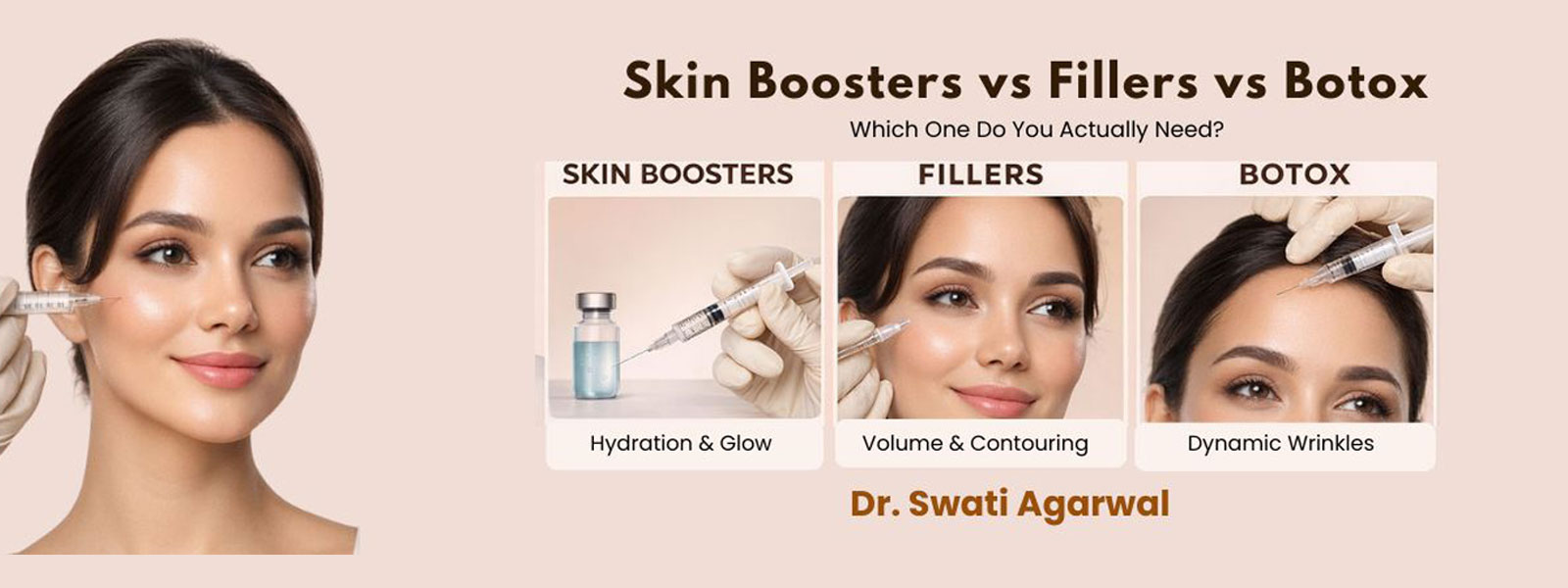
Botox relaxes muscles
Fillers restore volume
Skin boosters improve skin quality
Although all three are injectable treatments, they target completely different layers and aging mechanisms.
Which Treatment Gives the Most Natural Results?
This depends entirely on:
* Age
* Skin condition
* Facial anatomy
* Degree of aging
* Treatment goals
In modern dermatology, the trend is moving away from excessive correction toward:
* Subtle enhancement
* Collagen support
* Preventive rejuvenation
* Healthy skin appearance
Many patients actually benefit more from improving skin quality than dramatically altering facial volume.
For younger patients in their late 20s or early 30s, skin boosters and preventive Botox may often be more appropriate than aggressive filler correction.
Can These Treatments Be Combined?
Yes — and in fact, combination treatment often produces the best outcomes.
Because aging affects:
* Muscles
* Skin
* Fat compartments
* Collagen
* Bone support
Using only one treatment may not fully address all concerns.
For example:
* Botox may soften forehead lines
* Fillers may restore cheek support
* Skin boosters may improve hydration and glow
A personalized combination approach often creates more balanced and natural-looking rejuvenation.
What Is the Right Age to Start These Treatments?
There is no universal “correct age.”
Treatment decisions depend more on:
* Skin quality
* Genetics
* Lifestyle
* Sun damage
* Facial movement patterns
* Individual aging process
Some patients seek preventive treatment in their late 20s, while others may only require treatment later.
The key is not early over-treatment, but intelligent and conservative treatment planning.
Why Consultation Matters More Than Trends
Social media has created significant confusion in aesthetic medicine.
Patients are often exposed to:
* Unrealistic beauty standards
* Overfilled faces
* Excessive cosmetic trends
* Misinformation online
A proper dermatology consultation should focus on:
* Facial assessment
* Skin quality evaluation
* Individual anatomy
* Long-term skin health
* Natural results
The best aesthetic treatments are often the ones that are difficult for others to notice.
People may simply comment that the face looks fresher, healthier, or more rested.
Are These Treatments Safe?
When performed by qualified and experienced medical professionals, Botox, fillers, and skin boosters are generally considered safe procedures.
However, safety depends heavily on:
* Correct patient selection
* Proper technique
* Anatomical understanding
* Product quality
* Sterility standards
* Medical expertise
Choosing treatments based only on low prices or social media advertisements can increase the risk of complications and unsatisfactory outcomes.
The Shift Toward Regenerative and Preventive Aesthetics
One major change happening globally in aesthetic dermatology is the movement toward regenerative treatments.
Patients increasingly prefer:
* Natural collagen stimulation
* Skin quality enhancement
* Preventive anti-aging
* Subtle rejuvenation
* Healthy-looking skin
This is why treatments such as:
* Skin boosters
* Polynucleotides
* PDRN
* Collagen stimulators
* Bioregenerative injectables
are becoming increasingly popular alongside traditional Botox and fillers.
Modern aesthetic medicine is gradually shifting from “changing faces” toward improving skin health and graceful aging.
Final Thoughts from Dr. Swati Agarwal
Botox, fillers, and skin boosters are not competing treatments. They are different tools designed for different concerns.
The most important step is understanding:
* What is actually causing the concern
* Which layer of aging needs to be addressed
* What type of result the patient wants
A scientifically planned, conservative, and individualized approach almost always creates the most elegant and natural outcomes.
In aesthetic dermatology, subtlety is often the true marker of good treatment.
Frequently Asked Questions (FAQs)
Which is better — Botox, fillers, or skin boosters?
There is no single “best” treatment. Each targets different concerns and may be recommended based on individual facial assessment.
Do skin boosters add volume like fillers?
No. Skin boosters primarily improve hydration, elasticity, and skin quality rather than creating structural volume.
Can Botox make the face look unnatural?
Overdone Botox can look unnatural, but properly administered Botox usually creates subtle and refreshed results.
Are fillers permanent?
Most commonly used fillers are temporary and gradually dissolve over time.
Which treatment is best for glowing skin?
Skin boosters are often preferred for improving hydration, glow, and overall skin quality.