
✖

Apr, 04 2026
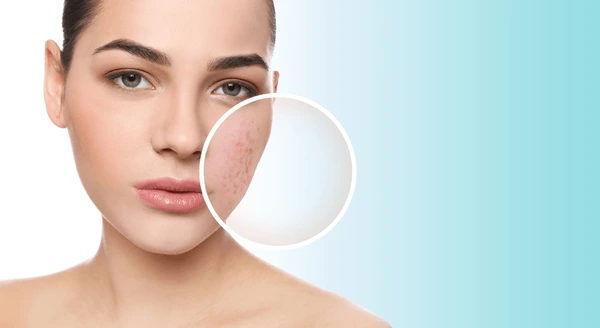
Acne scars can affect confidence and overall skin appearance, particularly when they occur on visible areas such as the face. Fortunately, advances in dermatology now offer multiple treatments that can significantly improve the appearance of acne scars. When performed under the supervision of trained dermatologists, these procedures can help restore smoother and healthier skin.
Dermatologists such as Dr. Swati Agarwal and Dr. Rajat Gupta, who see patients from Faridabad and South Delhi, emphasize that the most important step in treating acne scars is identifying the type of scar and selecting the appropriate treatment method.
Why Acne Scars Develop
Acne scars develop when inflammation from pimples damages deeper layers of the skin. During the healing process, the body produces collagen to repair the damaged tissue. However, this repair process may not always be perfect.
If too little collagen is produced, the skin develops depressed scars that appear as small pits or indentations. On the other hand, excessive collagen production can lead to raised scars.
Several factors increase the likelihood of developing acne scars:
• Severe or long-standing acne
• Delayed treatment of inflammatory acne
• Picking or squeezing pimples
• Genetic tendency to scar
• Improper skincare during active acne
Early treatment of acne is therefore extremely important to prevent permanent scarring.
Different Types of Acne Scars
Not all acne scars are the same. Dermatologists classify scars based on their appearance and depth because different scars respond better to different treatments.
Ice Pick Scars
These are deep, narrow scars that extend vertically into the skin. They often resemble tiny punctures on the surface of the skin. Ice pick scars can be difficult to treat and often require specialized procedures.
Boxcar Scars
Boxcar scars are wider depressions with sharply defined edges. They create an uneven skin surface and are commonly seen on the cheeks.
Rolling Scars
Rolling scars create a wavy appearance on the skin. They occur due to fibrous bands pulling the skin downward.
Post-Inflammatory Pigmentation
Although not technically scars, many patients also develop dark marks after acne heals. These marks are caused by excess pigment production in the skin and may take months to fade without treatment.
Understanding the type of scar is essential before beginning any procedure.
Dermatologist’s Clinical Insight
In dermatology practice, many patients expect that one laser treatment will completely remove their scars. In reality, acne scar treatment is usually a gradual process that requires a series of procedures.
Dermatologists often combine multiple techniques to improve skin texture over time. The exact treatment plan depends on the patient’s skin type, scar pattern, and healing response.
For patients with Indian skin tones, dermatologists must also carefully select treatment settings to avoid complications such as pigmentation changes.
Effective Treatments for Acne Scars
Modern dermatology offers several procedures that can significantly improve acne scars. Some of the most commonly used treatments include the following.
RF Microneedling
RF microneedling is widely used for treating acne scars. The procedure uses fine needles that penetrate the skin while delivering controlled radiofrequency energy.
This combination stimulates collagen production in deeper layers of the skin, helping to improve skin texture and reduce the appearance of scars over time.
Multiple sessions are usually required, and improvement becomes noticeable gradually as collagen remodeling occurs.
Laser Resurfacing
Laser treatments such as Fractional CO2 Laser are commonly used for deeper acne scars.
These lasers create tiny microscopic columns of thermal injury in the skin while leaving surrounding tissue intact. This stimulates the body’s natural healing process and promotes new collagen formation.
Over several weeks, the treated skin becomes smoother and more even in texture.
Subcision
Subcision is a minor dermatological procedure used particularly for rolling scars. In this technique, a small needle is inserted beneath the scar to release fibrous bands pulling the skin downward.
Once these bands are released, the skin surface becomes more even.
Chemical Reconstruction (TCA CROSS)
For deep ice-pick scars, dermatologists sometimes perform a technique known as chemical reconstruction using trichloroacetic acid.
A small amount of chemical is carefully applied inside the scar, which stimulates collagen formation and gradually reduces the depth of the scar.
Combination Treatments Often Work Best
In many cases, the most effective results are achieved through a combination of treatments rather than a single procedure.
For example, dermatologists may combine subcision with laser resurfacing or microneedling to address different aspects of scarring.
This personalized approach allows improvement in both scar depth and overall skin texture.
Importance of Sun Protection
Sun protection plays a critical role in acne scar treatment.
Exposure to sunlight can worsen pigmentation and slow down the healing process. Dermatologists therefore strongly advise using sunscreen regularly during the course of treatment.
Patients should also avoid excessive sun exposure after laser procedures or chemical treatments.
Frequently Asked Questions
Can acne scars be completely removed?
Complete removal is not always possible, but significant improvement in skin texture can usually be achieved with appropriate treatment.
How many sessions are required?
The number of sessions varies depending on scar severity. Many patients require three to six sessions of treatment.
Is acne scar treatment painful?
Most procedures involve mild discomfort, but dermatologists typically use numbing creams to make the treatment comfortable.
How soon will results be visible?
Improvement usually occurs gradually over several weeks as collagen remodeling takes place.
Is acne scar treatment safe for Indian skin?
Yes, when performed by experienced dermatologists using appropriate technology and treatment protocols.
When to See a Dermatologist
Patients who have persistent acne scars should seek evaluation from a qualified dermatologist. Early treatment can significantly improve outcomes and prevent scars from becoming more noticeable over time.
Dermatologists also help determine whether active acne needs to be controlled before beginning scar treatments.
Dermatology Care in Faridabad and South Delhi
Patients seeking evaluation for acne scars in Faridabad or Chattarpur South Delhi often consult dermatologists Dr. Swati Agarwal and Dr. Rajat Gupta, who treat a wide range of medical and cosmetic dermatology conditions.
Through careful assessment and personalized treatment plans, dermatologists can help patients improve skin texture and achieve healthier-looking skin.