
✖

Oct, 30 2026
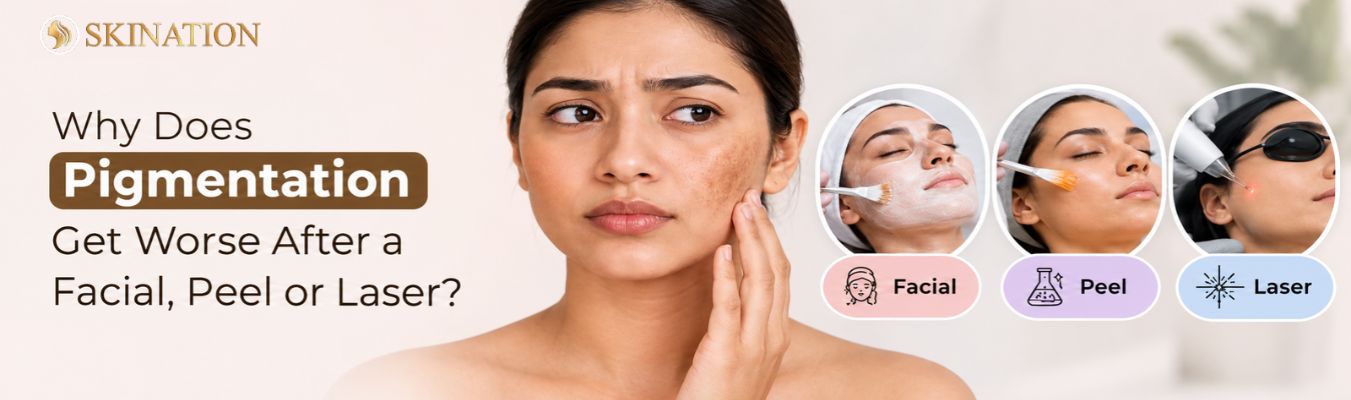
Pigmentation is one of the most common reasons people seek dermatological treatment. Yet, some people notice that their skin appears darker after a facial, chemical peel or laser treatment—especially around areas that were already pigmented.
This can be confusing. If a treatment was intended to improve pigmentation, why does the skin sometimes look darker afterwards?
The answer is that pigmentation is not a single skin condition, and treatments that intentionally stimulate or irritate the skin can occasionally trigger a temporary increase in pigment. In some people, particularly those with darker Indian skin tones or a tendency towards melasma or post-inflammatory hyperpigmentation, the skin’s response to inflammation can be more pronounced.
This does not necessarily mean that the treatment has permanently damaged the skin or that the procedure was unsuccessful. However, persistent or worsening pigmentation should not simply be ignored.
At Skination Clinic, we assess the underlying type of pigmentation before deciding whether a peel, laser, injectable treatment or medical skincare is appropriate.
What Causes Pigmentation to Become Darker After a Facial, Peel or Laser?
The most important concept to understand is inflammation.
When the skin experiences inflammation or injury, melanocytes—the cells responsible for producing melanin—can become more active. Increased melanin production or transfer of pigment into surrounding skin can result in darker patches.
This is known as post-inflammatory hyperpigmentation (PIH).
A treatment can therefore improve the underlying condition over time while temporarily causing inflammation and making pigmentation appear more noticeable.
The risk depends on several factors, including:
* Your natural skin tone
* Your tendency to develop pigmentation
* Whether you have melasma
* The type and depth of the treatment
* Laser wavelength and settings
* Peel concentration and formulation
* Existing skin inflammation
* Sun exposure
* Heat exposure
* Use of irritating skincare products
* Whether the skin barrier was already compromised
* How the treatment was performed and aftercare was followed
This is why the same treatment can produce excellent results in one person but cause temporary darkening in another.
Can a Facial Cause Pigmentation?
Yes, but it is important to understand what type of facial was performed.
A gentle, appropriately selected facial does not automatically cause pigmentation. However, aggressive exfoliation, excessive scrubbing, friction, extraction or irritating products can inflame the skin.
This is particularly relevant if you already have:
* Melasma
* Acne
* Sensitive skin
* Eczema or dermatitis
* A compromised skin barrier
Repeated friction can also worsen pigmentation in people who are already prone to it.
For example, vigorous scrubbing or repeated rubbing of the skin may create low-grade inflammation. If melanocytes respond strongly to that inflammation, darkening can follow.
Does every facial cause pigmentation?
No.
Pigmentation after a facial is not inevitable. The risk depends on the procedure, the products used, the intensity of treatment and the individual’s skin.
If pigmentation is your primary concern, a dermatologist should determine whether a cosmetic facial is appropriate or whether a medical treatment is more suitable.
Why Can Pigmentation Get Worse After a Chemical Peel?
Chemical peels work by producing controlled exfoliation and, depending on the peel, stimulating changes within the skin.
Some peels are superficial and designed to improve skin texture, acne, dullness or pigmentation. Others penetrate more deeply and require more careful patient selection and aftercare.
Because a peel deliberately produces a controlled chemical injury, some degree of inflammation can occur.
If that inflammatory response is excessive, or if the skin is exposed to UV radiation or heat during the recovery period, post-inflammatory hyperpigmentation can develop.
This is one reason why choosing the correct peel is more important than simply choosing the “strongest” peel.
Stronger does not necessarily mean better.
For pigmentation-prone Indian skin, an aggressive treatment is not automatically the best treatment.
The objective is to achieve sufficient therapeutic effect while controlling unnecessary inflammation.
A dermatologist may therefore choose:
* A particular acid or combination
* A lower concentration
* A superficial peel
* A longer interval between treatments
* Pre-treatment skincare
* A combination approach
* Or no peel at all if the pigmentation pattern suggests another diagnosis
The treatment should be selected according to the type of pigmentation, not simply the patient’s desire for faster results.
Can Laser Treatment Cause Pigmentation?
Yes.
Laser treatment can occasionally cause temporary or persistent pigmentation changes, particularly when the skin is exposed to excessive heat or inflammation.
However, “laser” is an extremely broad term.
Different lasers have different wavelengths, targets, pulse durations and mechanisms of action. A laser used for hair reduction is fundamentally different from a laser used for vascular lesions, resurfacing or pigment-related concerns.
Even within the same laser category, treatment parameters matter.
Why does this matter for Indian skin?
Indian skin commonly falls within Fitzpatrick skin types III–V, although individual skin tones vary considerably.
Skin containing more melanin can have a greater risk of pigmentary complications following certain procedures, especially when treatment causes significant epidermal injury or inflammation.
This does not mean that people with Indian skin cannot undergo laser treatments.
It means that treatment selection and settings should be individualized.
A dermatologist should consider your baseline pigmentation, tanning, previous response to procedures and the specific indication before choosing a laser.
Is Darkening Immediately After Laser Always Pigmentation?
Not necessarily.
After some procedures, the skin can temporarily appear:
* Red
* Brown
* Darker
* Swollen
* Dry
* Flaky
* Slightly crusted
Some of these changes are part of the expected healing response.
For example, treated pigment may initially become darker before it gradually clears. In other situations, however, new diffuse brown pigmentation may represent post-inflammatory hyperpigmentation.
The distinction is important.
If the pigmentation continues to worsen, spreads beyond the treated area, persists longer than expected or is accompanied by significant irritation, it is sensible to have the skin reviewed rather than repeatedly treating it.
What Is Post-Inflammatory Hyperpigmentation?
Post-inflammatory hyperpigmentation, or PIH, is darkening that develops after inflammation or injury to the skin.
Common triggers include:
* Acne
* Burns
* Insect bites
* Cuts
* Irritation
* Eczema
* Waxing
* Aggressive facials
* Chemical peels
* Certain laser procedures
* Picking or squeezing acne
The original inflammation may disappear while the pigmentation remains for weeks or months.
PIH is particularly frustrating because people may focus on removing the pigment without addressing the inflammatory trigger that caused it.
For example, if someone continues to develop acne and simultaneously treats the resulting pigmentation, new marks may continue appearing.
That is why dermatological treatment often needs to address both the cause and the pigmentation.
What About Melasma?
Melasma needs special consideration.
Melasma is a chronic, relapsing pigmentary condition that is influenced by multiple factors, including ultraviolet radiation and visible light, hormonal influences and individual susceptibility.
A person may undergo a facial, peel or laser treatment expecting the pigmentation to disappear permanently. If the underlying melasma is not appropriately managed, pigmentation may return or fluctuate.
In some individuals, procedures that create significant inflammation can aggravate melasma.
This is why a dermatologist should distinguish melasma from other forms of pigmentation before recommending an aggressive procedure.
The treatment plan for melasma may involve:
* Photoprotection
* Prescription topical therapy when appropriate
* Selected chemical peels
* Carefully chosen laser or light-based procedures in selected patients
* Maintenance treatment
* Regular follow-up
The goal is not simply to perform a procedure. It is to control the disease over time.
Who Is More Likely to Develop Pigmentation After a Procedure?
The risk may be higher in people who have:
* A previous history of post-inflammatory pigmentation
* Melasma
* Medium to darker skin tones
* Recent tanning
* Active acne or dermatitis
* A damaged skin barrier
* Excessive sun exposure
* Frequent heat exposure
* A history of pigmentation after procedures
Previous experience matters too.
If you developed significant pigmentation after a previous peel or laser, your dermatologist should know this before planning another procedure.
How Can You Reduce the Risk of Pigmentation After a Peel or Laser?
1. Get the diagnosis first
The most important step is identifying what type of pigmentation you actually have.
Brown patches from melasma, post-acne pigmentation, freckles, lentigines and other pigmentary conditions do not necessarily require the same treatment.
2. Avoid treating actively irritated skin
If the skin is inflamed, excessively dry, sunburned or irritated, the timing of a procedure may need to be reconsidered.
3. Follow a dermatologist-directed skincare routine
Depending on the condition, your dermatologist may recommend appropriate pigment-control or barrier-supportive products before and/or after treatment.
Do not automatically combine multiple acids, retinoids, scrubs and exfoliating products after a procedure.
More irritation does not equal faster improvement.
4. Take sun protection seriously
UV exposure can worsen many pigmentary conditions.
After a procedure, photoprotection becomes particularly important because the skin may be more vulnerable to inflammation and pigmentary changes.
A broad-spectrum sunscreen appropriate for your skin type should form part of the recovery plan.
5. Don’t rush into another procedure
If pigmentation appears after a peel or laser, immediately performing another aggressive treatment may sometimes increase inflammation.
The appropriate response depends on the cause and severity.
A dermatologist may recommend observation and barrier recovery, medical treatment or a modified treatment plan rather than repeating the same procedure.
What Should You Do If Your Skin Gets Darker After a Facial, Peel or Laser?
First, don’t panic.
Some post-treatment darkening can be temporary and may settle as the skin heals.
However, avoid trying to “bleach” the area aggressively at home.
For the first step:
1. Stop unnecessary exfoliation.
2. Avoid scrubbing or rubbing the treated skin.
3. Use gentle skincare.
4. Maintain appropriate sun protection.
5. Avoid unnecessary heat exposure if your treating dermatologist has advised avoiding it.
6. Follow the specific post-procedure instructions provided to you.
7. Contact your dermatologist if the pigmentation is worsening or not following the expected recovery pattern.
If there is significant pain, blistering, severe swelling, discharge or other concerning symptoms, the skin should be assessed promptly.
Does Pigmentation Mean the Laser or Peel Has Damaged Your Skin?
Not necessarily.
Pigmentation can be a temporary inflammatory response, rather than evidence of permanent damage.
At the same time, persistent pigmentary change should not be dismissed.
The correct approach is to determine:
* What procedure was performed?
* What was the original diagnosis?
* What laser or peel was used?
* What treatment settings or concentration were used?
* When did the darkening begin?
* Is the pigmentation localized or diffuse?
* Was there crusting, burning or significant inflammation?
* Was there sun exposure afterwards?
* Does the patient have a previous history of PIH or melasma?
These details help determine whether the pigmentation represents expected healing, PIH, recurrence of the original condition or another problem.
Can Pigmentation Be Treated After It Gets Worse?
In many cases, yes, but treatment depends on the diagnosis.
A dermatologist may consider a combination of:
* Topical pigment-regulating medications
* Barrier repair
* Strict photoprotection
* Chemical peels selected appropriately
* Laser or light-based treatment in selected cases
* Treatments targeting the underlying inflammatory condition
* Maintenance therapy
There is no single “best pigmentation treatment” for everyone.
For example, the approach to melasma can be very different from the approach to isolated post-acne pigmentation.
This is also why repeating the exact procedure that caused the pigmentation is not always the answer.
Should You Avoid Facials, Peels and Lasers If You Have Pigmentation?
Not necessarily.
The presence of pigmentation does not automatically mean that procedures are unsuitable.
The important question is:
Which procedure is appropriate for your specific skin condition, skin type and current skin state?
Some patients may benefit from carefully selected peels or laser treatments. Others may initially require medical skincare and stabilization before considering procedures.
A personalized plan is especially important if you have previously developed pigmentation after treatment.
When Should You See a Dermatologist?
Consider a dermatology consultation if:
* Pigmentation repeatedly worsens after cosmetic treatments.
* Dark patches are becoming progressively more prominent.
* You have melasma that keeps recurring.
* You develop pigmentation after every peel or laser.
* Your skin burns or remains irritated after procedures.
* You are unsure whether the pigmentation is melasma, PIH or another condition.
* You are planning a peel or laser specifically for pigmentation.
* You have an important event or wedding approaching and want to minimize the risk of post-treatment pigmentation.
This is particularly important before undergoing a strong peel or laser treatment simply because it is being marketed as a “glow” procedure.
Pigmentation Treatment Should Be Planned—Not Improvised
Pigmentation is often more complicated than it appears in a mirror.
A brown patch may be caused by melasma, post-inflammatory hyperpigmentation, sun-induced pigmentation or another condition. Treating every brown patch with the same facial, peel or laser can therefore produce disappointing results.
The goal of dermatological treatment is not simply to make the skin peel or feel smoother.
The goal is to identify the pigmentary disorder, control inflammation, select an appropriate treatment and minimize the risk of recurrence or post-inflammatory pigmentation.
At Skination Clinic, treatment selection can be individualized according to the patient’s pigmentation pattern, skin type, previous treatment history and goals. Depending on the diagnosis, the plan may include medical skincare, peels, laser-based treatments or combination approaches.
FAQs
Why does my pigmentation look darker after a facial?
A facial involving friction, extraction, exfoliation or irritating products can cause inflammation. In pigmentation-prone skin, this inflammation may trigger post-inflammatory hyperpigmentation.
Can a chemical peel make pigmentation worse?
Yes. Although chemical peels can be used to manage certain pigmentation problems, excessive inflammation, inappropriate peel selection or inadequate post-treatment photoprotection can contribute to PIH.
Can laser treatment cause pigmentation?
Yes. Some laser procedures can cause temporary or persistent pigmentary changes, particularly if treatment produces significant inflammation or if the skin is exposed to UV radiation afterwards.
Is pigmentation after laser permanent?
Not necessarily. Some post-treatment darkening is temporary and settles during healing. Persistent pigmentation should be assessed by a dermatologist.
Is pigmentation after a peel normal?
Some temporary darkening or changes in skin appearance can occur during the healing process, depending on the peel. However, significant or progressively worsening pigmentation should be evaluated.
How can I prevent pigmentation after a peel or laser?
Appropriate patient selection, individualized treatment settings, adequate preparation, gentle aftercare and consistent photoprotection can help reduce the risk. Your dermatologist may also recommend specific pre- and post-treatment skincare.
Can people with Indian skin safely undergo laser treatments?
Yes. Laser treatments can be performed in Indian skin, but treatment parameters and the choice of laser should be individualized because pigmentary complications can be more relevant in medium-to-dark skin types.
Should I use a scrub if my skin becomes darker after a treatment?
Generally, avoid aggressive scrubbing. Additional irritation can potentially worsen post-inflammatory pigmentation. Follow your treating dermatologist’s post-procedure instructions instead.
Can melasma become worse after a facial or laser?
It can. Melasma is a chronic pigmentary condition and may worsen with inflammation, heat or environmental triggers in susceptible individuals. Treatment therefore needs to be individualized.
What is the best treatment for pigmentation after a peel or laser?
There is no single treatment that is best for every patient. The appropriate approach depends on whether the pigmentation represents PIH, melasma, sun-induced pigmentation or another condition.
Final Takeaway
If pigmentation becomes darker after a facial, peel or laser, it does not automatically mean that the treatment has failed or caused permanent damage.
However, pigmentation should never be treated aggressively without understanding why it developed.
The safest strategy is to identify the underlying pigmentary condition, control inflammation, protect the skin from UV exposure and choose procedures according to your skin type and diagnosis.
For pigmentation-prone Indian skin, the principle is simple:
The goal is not the strongest treatment. The goal is the right treatment with the right intensity, at the right time.
— Dr. Swati Agarwal, MD Dermatology
Senior Consultant Dermatologist
Skination Clinic, Delhi NCR