
✖

Jul, 17 2026
Dark patches, uneven skin tone and stubborn marks are among the most common reasons people visit a dermatologist. Many patients describe every dark area on the face as “pigmentation,” but pigmentation is a broad term. Melasma is one specific type of pigmentation, and it behaves very differently from acne marks, sun spots, post-inflammatory hyperpigmentation and tanning.
This distinction matters. A cream or procedure that helps one kind of pigmentation may not be the right choice for another. In some cases, incorrect treatment, frequent irritation, excessive exfoliation or unprotected sun exposure can make patches darker.
At Skination Skin & Hair Clinic, patients from Chattarpur, South Delhi, Greenfield Colony and Faridabad often ask: “Is this melasma or just pigmentation?” This guide explains the difference, why it happens and how dermatologists plan treatment safely.
What Does “Pigmentation” Actually Mean?
Pigmentation simply refers to colour in the skin. When the skin produces or retains extra melanin, it can appear as brown, grey-brown or blackish patches. The medical term for darkening is hyperpigmentation.
Pigmentation can occur because of:
* Acne, pimples, boils or folliculitis
* Sun exposure and tanning
* Melasma
* Eczema, irritation or allergic reactions
* Aggressive facials, waxing, scrubs or chemical products
* Injuries, burns or insect bites
* Certain medicines
* Hormonal changes
* Age-related sun spots
So, melasma is pigmentation, but not all pigmentation is melasma.
What Is Melasma?
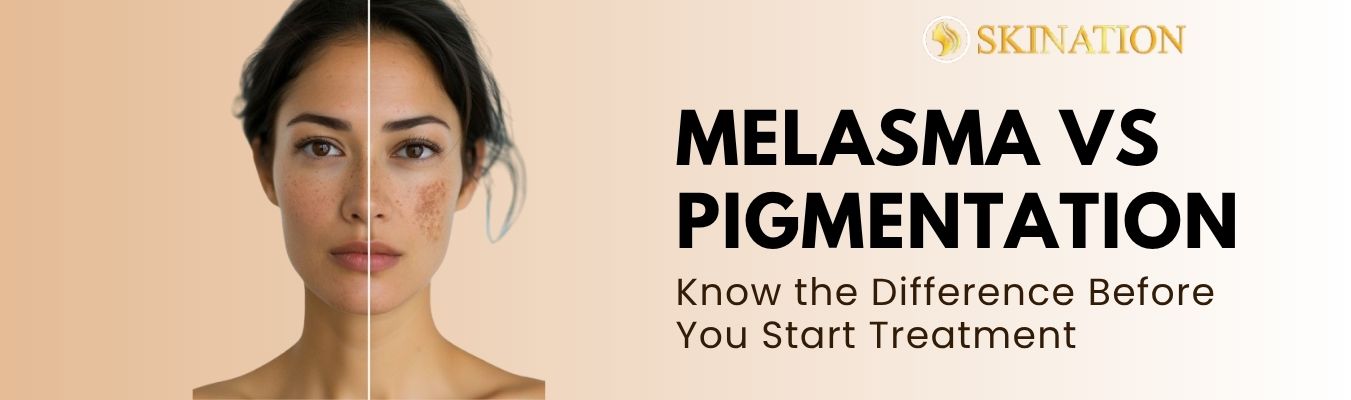
Melasma is a chronic pigmentary condition that usually appears as symmetrical, patchy brown or grey-brown discolouration on sun-exposed areas of the face. It is especially common on the cheeks, forehead, bridge of the nose, upper lip and chin.
It is more frequently seen in women, but men can also develop it. Melasma often becomes more visible during pregnancy, after hormonal changes, with regular heat or sunlight exposure, and in people with a family tendency.
Unlike a single acne mark, melasma usually does not begin after one pimple or injury. It tends to develop gradually and may flare repeatedly.
Melasma vs Other Pigmentation: The Key Differences
1. Pattern of patches
Melasma usually has a fairly symmetrical pattern. For example, both cheeks may show similar brown patches, or there may be a band of pigmentation across the forehead.
Post-acne marks are more random. They generally appear where pimples were present. Sun spots may be isolated, sharply defined brown spots rather than broad patches.
2. Common triggers
Melasma is strongly linked with ultraviolet light, visible light, heat, hormonal changes and genetic predisposition. Even brief, repeated sun exposure can worsen it.
Post-inflammatory hyperpigmentation occurs after inflammation. Acne, eczema, friction, a burn, a rash or a cosmetic reaction may leave marks behind.
Tanning occurs after sun exposure and often improves gradually when sun protection is consistent.
3. How long it lasts
A fresh acne mark may fade over weeks to months with the right routine. Melasma is usually more persistent. It can improve substantially, but it requires maintenance because it has a tendency to recur.
4. Depth of pigment
Pigment can sit at different levels of the skin. Some superficial pigmentation responds relatively well to topical treatment. Deeper pigment may look greyish or slate-brown and can take longer to improve.
A dermatologist may use clinical examination and, when needed, a Wood’s lamp assessment to understand the likely pattern and depth before recommending treatment.
Why Melasma Is So Stubborn
Melasma is not simply “extra colour on the skin.” It is influenced by pigment-producing cells, inflammation, blood vessels, light exposure, heat and hormonal factors. This is why a patient may see temporary improvement with a strong cream but experience recurrence after a holiday, outdoor event, hot weather or discontinuation of maintenance care.
Overuse of steroid-containing fairness creams is another common problem. These products may initially make skin look lighter or calmer, but prolonged unsupervised use can cause thinning, acne, redness, sensitivity and rebound pigmentation.
Common Types of Facial Pigmentation
Post-acne marks
These are dark marks left after pimples heal. They may be brown, red-brown or greyish. They are not the same as acne scars. A mark is mainly colour change; a scar has a change in skin texture, such as pits, depressions or raised areas.
Sun spots
Also called solar lentigines, these are more common with cumulative sun exposure. They are usually individual, well-defined brown spots on the face, hands and other exposed areas.
Tanning
Tanning is a diffuse darkening caused by sun exposure. It can coexist with melasma or acne marks, making the skin look more uneven.
Frictional pigmentation
Repeated rubbing, harsh cleansing, frequent scrubbing, tight masks, waxing or irritation from products can contribute to darkening in some areas.
Pigmentation after cosmetic procedures
Improperly selected or overly aggressive procedures can trigger post-inflammatory hyperpigmentation, especially in Indian skin types. This is why treatment settings, pre-procedure preparation and aftercare are important.
What Actually Works for Melasma and Pigmentation?
There is no single “best cream” for every patient. Treatment depends on the diagnosis, skin type, lifestyle, pregnancy or breastfeeding status, sensitivity, current products and the depth of pigment.
1. Daily sun and visible-light protection
This is the foundation of treatment. Without consistent photoprotection, even the best prescription cream or procedure will struggle to give stable results.
Use a broad-spectrum sunscreen with high UVA and UVB protection. For melasma-prone skin, tinted sunscreen can be particularly useful because iron oxides may help protect against visible light. Apply an adequate amount and reapply during prolonged outdoor exposure.
Hats, umbrellas, sunglasses and avoiding direct peak sunlight add meaningful protection. Heat can also trigger melasma in some people, so frequent exposure to intense heat may need to be reduced where practical.
2. Prescription topical treatment
Depending on the diagnosis, a dermatologist may use ingredients such as hydroquinone, tretinoin, azelaic acid, kojic acid, tranexamic acid, cysteamine, niacinamide or other pigment-regulating combinations.
These are not interchangeable. Stronger treatment is not always better. The aim is improvement without irritation, because irritation itself can worsen pigmentation.
3. Oral treatment in selected cases
For some patients with melasma, oral tranexamic acid may be considered after a detailed medical history and risk assessment. It is not suitable for everyone and should never be started casually without dermatology supervision.
4. Chemical peels
Superficial chemical peels can help selected cases of acne marks, tanning and superficial pigmentation. The peel type, concentration, number of sessions and pre- and post-care should be individualised.
A peel is not a shortcut to instant fairness. When used appropriately, it can support a longer-term pigmentation plan.
5. Laser and energy-based treatments
Lasers can be useful for selected pigmentation concerns, including certain sun spots and resistant marks. However, melasma needs a cautious approach. In the wrong setting or without maintenance care, aggressive laser treatment can trigger rebound darkening.
At Skination, treatment planning focuses on the diagnosis first, rather than recommending the same procedure for every dark patch.
A Simple Routine for Pigmentation-Prone Skin
A basic routine is often more effective than ten active products used inconsistently.
Morning:
* Gentle cleanser
* Dermatologist-recommended antioxidant or pigment-control product, if needed
* Moisturiser
* Broad-spectrum sunscreen, preferably tinted for melasma-prone skin
Night:
* Gentle cleanser
* Prescription treatment only as advised
* Barrier-supporting moisturiser
Avoid combining multiple exfoliating acids, retinoids, scrubs and bleaching products without guidance. Burning, peeling and persistent redness are not signs that treatment is “working”; they may be signs of irritation.
When Should You See a Dermatologist?
Book an assessment if:
* Patches are spreading or becoming darker
* Pigmentation began during pregnancy or after hormonal changes
* You have used steroid or fairness creams
* Acne marks are not improving
* You are considering chemical peels, lasers or oral medication
* A dark spot is new, irregular, changing, itchy, bleeding or very different from other spots
A proper diagnosis can save months of trial-and-error treatment.
Frequently Asked Questions
Can melasma be cured permanently?
Melasma can be controlled very well, but it has a tendency to recur. Long-term success usually depends on maintenance treatment and consistent sun protection.
Is melasma caused only by pregnancy?
No. Pregnancy is one trigger, but sunlight, heat, hormones, family history, certain medicines and skin inflammation can also contribute.
Can I use home remedies for pigmentation?
Lemon, baking soda, toothpaste and harsh scrubs can irritate the skin and worsen darkening. A gentle, evidence-based routine is safer.
Are chemical peels safe for Indian skin?
They can be safe and effective when selected and performed appropriately. Indian skin can develop post-inflammatory pigmentation if treatment is too aggressive, so dermatologist guidance is important.
Get a Personalised Pigmentation Plan
Melasma, acne marks, tanning and sun spots may look similar in photographs, but they do not always need the same treatment. A consultation helps identify the cause, assess your skin barrier and create a realistic plan for clearer, more even-looking skin.
For dermatologist-led treatment of melasma and pigmentation in Chatarpur, South Delhi and Greenfield Colony, Faridabad, consult Dr. Rajat Gupta at Skination Skin & Hair Clinic.