


✖

Apr, 12 2026
Patients visiting dermatology clinics in Faridabad, Chattarpur South Delhi, and Gurgaon often ask which treatment is better for reducing wrinkles or improving facial contours. Although Botox and fillers are both used for facial rejuvenation, they work in completely different ways and address different concerns.
Understanding these differences can help patients make informed decisions when considering cosmetic dermatology procedures.
Why Wrinkles and Volume Loss Occur?
As people age, the skin gradually undergoes several changes. The production of collagen and elastin slows down, which reduces the skin’s firmness and elasticity. At the same time, facial fat that once provided youthful fullness begins to diminish.
Another important factor is repeated facial expressions. Everyday actions such as smiling, frowning or squinting cause facial muscles to contract. Over time, these repeated movements lead to the formation of expression lines.
Because wrinkles and facial volume loss develop through different mechanisms, different treatments are needed to address them effectively.
What Is Botox?
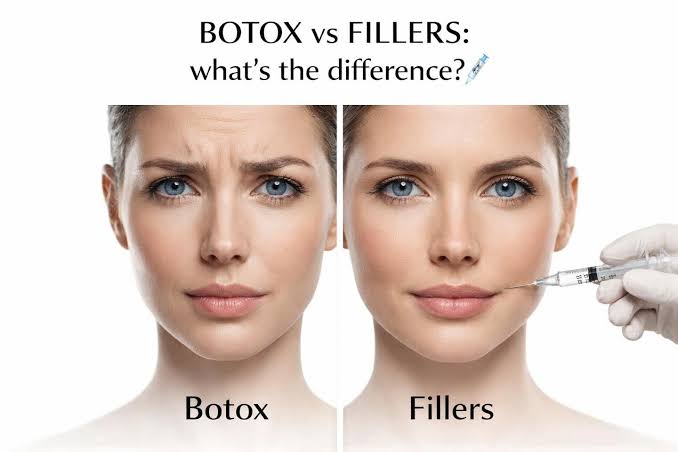
Botox is a purified protein derived from botulinum toxin. When injected in extremely small doses into specific facial muscles, it temporarily relaxes those muscles.
This relaxation reduces the appearance of wrinkles caused by muscle movement. These wrinkles are often referred to as dynamic wrinkles, because they become more visible when facial expressions are made.
By limiting the contraction of targeted muscles, Botox smooths the skin and softens expression lines.
Areas Commonly Treated with Botox
Dermatologists commonly use Botox to treat several areas of the face.
These include:
• Horizontal forehead lines
• Frown lines between the eyebrows
• Crow’s feet around the eyes
• Bunny lines on the nose
• Jawline slimming
• Excessive sweating in the underarms
Results usually begin to appear within a few days after the injection and become fully visible within one to two weeks.
What Are Dermal Fillers?
While Botox relaxes muscles, dermal fillers work by restoring volume beneath the skin.
Fillers are gel-like substances that are carefully injected into specific areas of the face to improve contour and fullness. Many modern fillers are made of hyaluronic acid, a substance that naturally exists in the skin.
By restoring lost volume, fillers can smooth wrinkles and enhance facial structure.
Areas Commonly Treated with Fillers
Dermal fillers are commonly used for:
• Cheek volume restoration
• Under-eye hollows
• Nasolabial folds (lines beside the nose)
• Lip enhancement
• Jawline contouring
• Chin definition
These treatments can subtly enhance facial balance while maintaining natural expressions.
Dermatologist Insight
One of the most common misconceptions among patients is that Botox and fillers are interchangeable. In reality, each treatment has a specific purpose.
Botox is most effective for wrinkles caused by muscle activity, whereas fillers address volume loss and structural changes in the face.
Many patients benefit from a combination of the two treatments to achieve balanced facial rejuvenation.
Another important consideration is technique. The outcome of these procedures depends heavily on the experience and understanding of facial anatomy by the treating dermatologist.
What to Expect During the Procedure
Both Botox and filler procedures are relatively quick and usually performed in an outpatient dermatology setting.
Before the treatment begins, the dermatologist evaluates facial structure, discusses patient concerns, and designs an individualized treatment plan.
The injections themselves take only a few minutes, and most patients are able to return to normal activities shortly afterward.
Mild swelling or redness may occur at the injection site but usually resolves within a short period.
Safety Considerations
When performed by qualified dermatologists using approved products, both Botox and dermal fillers are considered safe procedures.
However, because these injections involve delicate facial structures, proper technique and anatomical knowledge are essential.
Patients should therefore avoid receiving injections from untrained providers or non-medical establishments.
Frequently Asked Questions
How long does Botox last?
Most Botox treatments last around three to six months.
How long do dermal fillers last?
Depending on the product used, fillers can last from nine months to over a year.
Will the results look natural?
When performed by experienced dermatologists, results are designed to enhance natural facial features rather than create an artificial appearance.
Is there any downtime?
Most patients experience minimal downtime and can resume normal activities soon after the procedure.
Dermatology Expertise in Faridabad and South Delhi
Patients considering aesthetic dermatology procedures in Faridabad, Chattarpur South Delhi, or Gurgaon often consult dermatologists Dr. Swati Agarwal and Dr. Rajat Gupta for individualized treatment plans.
Through careful evaluation and precise injection techniques, dermatologists aim to provide natural-looking results that complement each patient’s facial structure.