

✖

Jan, 12 2026
Overview
At a time when they are already overburdened both physically and emotionally, women undergoing IVF or early pregnancy can endure upsetting changes to their skin and hair. Women frequently experience surprise acne flare-ups, sudden pigmentation, extreme dryness, itching, or hair loss, leaving them unsure of safe remedies.
Unfortunately, false information on the internet frequently causes needless anxiety or total disregard for dermatological treatment.
This blog attempts to offer a scientific, evidence-based information on skin and hair treatments that are deemed safe during IVF and early pregnancy—while explicitly outlining what must be avoided or postponed—as a dermatologist who treats numerous women undergoing reproductive treatments.
This guide will assist you in selecting the best dermatologist in Delhi, Chattarpur, or Faridabad for pregnancy-safe treatment.
Why Skin and Hair Problems Increase During IVF and Early Pregnancy
1. Hormonal Adjustments During IVF
IVF treatment involves intentional hormonal adjustments through:
• Gonadotropins
• Estrogen supplementation
• High doses of progesterone support
These hormones affect:
• Sebaceous glands → resulting in acne
• Melanocytes → leading to pigmentation changes and melasma
• Hair follicles → causing an early transition to the telogen phase
• Epidermal barrier → resulting in dryness and sensitivity
These responses are normal physiological changes rather than abnormal reactions.
2. Stress-Induced Cortisol Surge
IVF's emotional strain raises cortisol levels, which:
exacerbate inflammatory acne
Increases skin sensitivity;
causes hair loss;
and delays skin healing
This explains why problems might appear out of nowhere in women who had previously "good skin."
3. Immune Tolerance in Early Pregnancy
Immune adaptability is necessary for early pregnancy in order to facilitate implantation. This may:
Worsen pigmentation or eczema,
Increase allergic reactions,
Change how the skin reacts to active chemicals.
Core Dermatology Principles During IVF & Pregnancy
A dermatologist skilled in treating infertility adheres to these guidelines:
Topical therapies are preferred over oral ones; systemic absorption is avoided; conservative dosage and spacing are used; only substances with proven pregnancy safety data are used; and barrier repair and inflammation control are prioritized.
To ensure the highest level of safety, treatment strategies at Skination are tailored based on the stage and trimester of IVF.
Is skin care safe during early pregnancy after IVF?
Skin care during early pregnancy after IVF is safe when pregnancy-approved products are used. Harsh actives like retinoids, high-strength salicylic acid, and chemical peels should be avoided. A dermatologist can recommend gentle cleansers, moisturizers, and sunscreens suitable for early pregnancy.
Skin Treatments Considered SAFE During IVF & Early Pregnancy
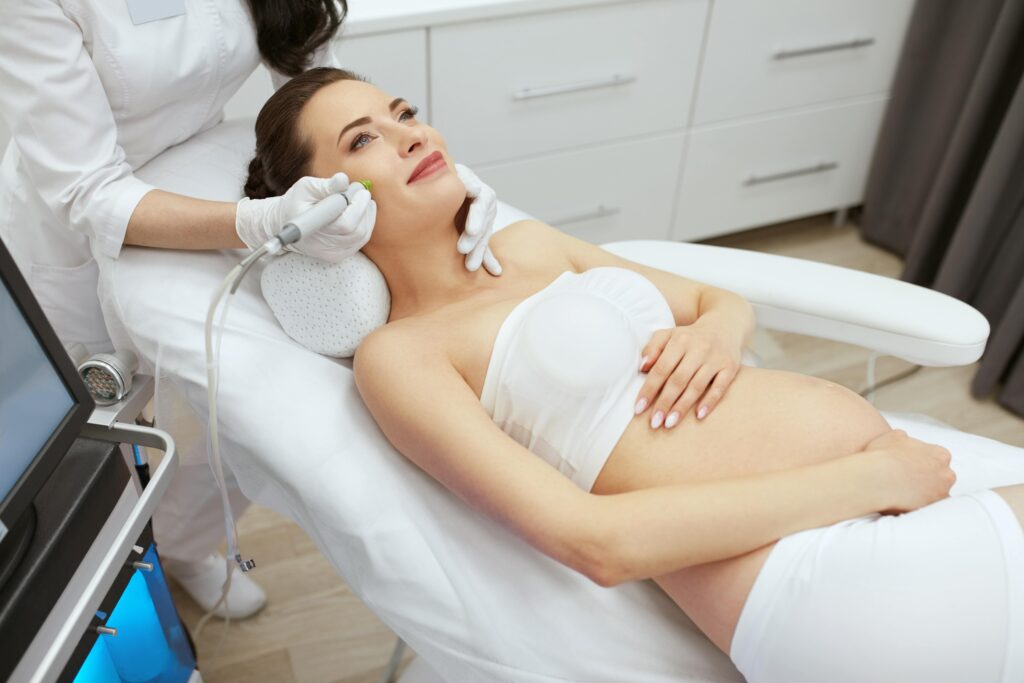
1. Medical-Grade Hydrating & Barrier Repair Facials
These facials aim to restore compromised skin barrier function.
Common ingredients:
• Hyaluronic acid
• Ceramides
• Panthenol
• Niacinamide
✔ Non-invasive
✔ No hormonal interference
✔ Safe during IVF and pregnancy
Such facials are frequently recommended by the best skin specialists in Faridabad and Delhi for hormonally sensitive skin.
2. Pregnancy-Safe Topical Skincare (Dermatologist Prescribed)
Many “natural” products are unsafe due to unregulated actives.
Safe ingredients include:
• Azelaic acid
• Niacinamide
• Low-strength vitamin C
• Hyaluronic acid
• Physical sunscreens (zinc oxide, titanium dioxide)
Ingredients avoided:
• Retinoids
• High-strength salicylic acid
• Hydroquinone
• Essential oil blends
Which skin care ingredients should be avoided after IVF?
After IVF and during early pregnancy, ingredients such as retinoids, isotretinoin, high-dose salicylic acid, hydroquinone, and strong chemical peels should be avoided. These may affect fetal safety. A skin specialist helps select pregnancy-safe alternatives.
3. Acne Treatment During IVF & Pregnancy
Hormonal acne during IVF is commonly progesterone-driven.
Safe approaches include:
• Pregnancy-approved topical medications
• Gentle chemical exfoliation (case-specific)
• LED light therapy under medical supervision
Oral acne medications are generally avoided unless absolutely necessary.
4. Pigmentation & Melasma Management
Hormonal pigmentation is best managed conservatively.
Safe measures:
• Broad-spectrum physical sunscreens
• Azelaic acid-based therapy
• Barrier-repair skincare
Aggressive pigment correction is postponed until postpartum.
5. Hair Fall Treatment During IVF
Most IVF-related hair fall is telogen effluvium, which is reversible.
Safe management includes:
• Nutritional correction (iron, vitamin D, protein)
• Pregnancy-approved topical scalp solutions
• Gentle scalp treatments
Injectable hair procedures like PRP or GFC are usually postponed during early pregnancy due to limited safety data.
Treatments That Should Be AVOIDED or POSTPONED
Avoidance is precautionary, not fear-based.
What skin care routine is best during early IVF pregnancy?
A safe skin care routine during early IVF pregnancy includes a mild cleanser, fragrance-free moisturizer, mineral sunscreen, and minimal active ingredients. Avoid frequent product changes and cosmetic procedures. Dermatologist-guided care ensures skin health without compromising pregnancy safety.
Common Myths About Skin Treatments During IVF
Myth: Even facials can cause miscarriage
Fact: Non-invasive facials do not affect the uterus
Myth: Hair fall means IVF failure
Fact: Hair fall reflects hormonal shifts, not implantation outcome
Myth: All acne medicines are unsafe
Fact: Many topical options are safe when prescribed correctly
Dermatologist-Led IVF Skin Care at Skination
At Skination, patients receive:
• Ethical, conservative treatment plans
• Clear explanation of risks vs benefits
• Realistic expectations
• Dermatologist-performed procedures only
This is why many patients consider Skination among the best skin clinics in Delhi and Faridabad for pregnancy-safe dermatology.
Final Takeaway
IVF and early pregnancy require careful modification—not complete avoidance—of dermatologic treatments. With expert guidance from the best skin specialist in Chattarpur, Delhi or Faridabad, skin and hair health can be safely maintained throughout the fertility journey.
Frequently Asked Questions (FAQ)
Is skincare safe during IVF treatment?
Yes, when prescribed by a dermatologist experienced in IVF-related care.
Can I do laser hair removal during pregnancy?
Laser treatments are generally postponed during pregnancy due to insufficient safety data.
Which dermatologist should I consult during IVF?
Always consult a qualified dermatologist, preferably one experienced in treating hormonal and IVF patients.
Is acne treatment safe during early pregnancy?
Yes, several topical acne treatments are safe when used correctly.
When can I resume aesthetic treatments after pregnancy?
Most aesthetic procedures can be resumed after delivery and breastfeeding, depending on individual assessment.