
✖

Sep, 12 2026
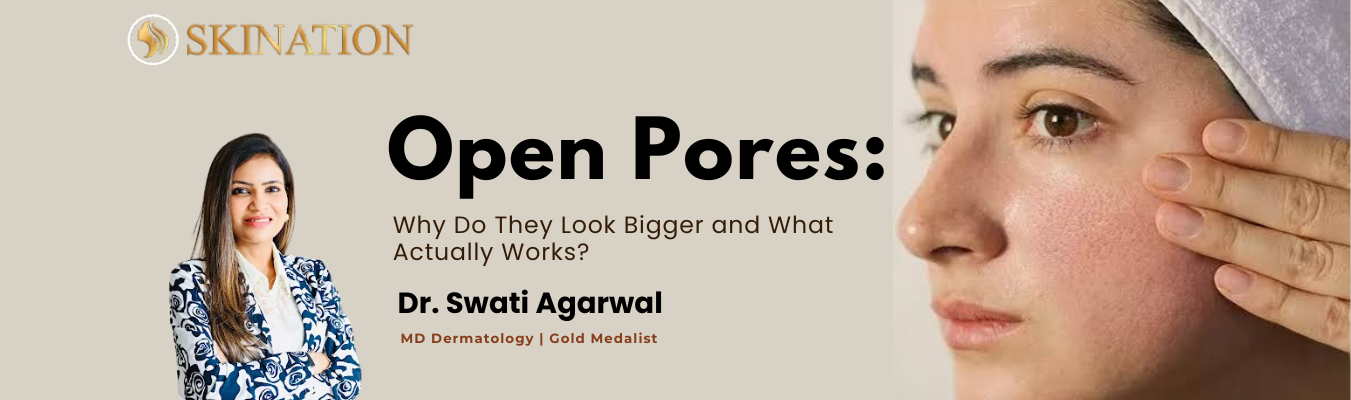
“Doctor, my pores are getting bigger.”
This is one of the most common concerns I hear from patients who want smoother-looking skin.
They often describe:
* Tiny visible openings around the nose
* Pores becoming more noticeable on the cheeks
* An uneven skin texture
* Skin that looks rough despite using good skincare
* Makeup settling into the pores
* Pores appearing larger in photographs
But there is an important misconception to address first.
Pores cannot literally be “closed” like a door.
A pore is the opening of a hair follicle and its associated sebaceous gland onto the skin surface. Everyone has pores.
What we can do is reduce the factors that make pores look more prominent and improve the surrounding skin’s texture, oiliness, collagen support and overall appearance.
The American Academy of Dermatology notes that clogged pores, oily skin, reduced skin firmness and sun damage can all make pores appear more noticeable.
So when someone asks:
“How can I permanently close my pores?”
My answer is:
The goal isn’t to close them. The goal is to make them less visible.
And that requires understanding why they look enlarged in the first place.
Why do pores look bigger?
There isn’t one single cause.
Several factors can make pores more visible, and often more than one is present.
1. Excess oil production
People with oily or combination skin tend to notice pores more easily.
When more sebum is produced, pores can become more noticeable, particularly around the:
* Nose
* Inner cheeks
* Forehead
* Chin
Oil itself isn’t “bad” for the skin.
But excess sebum combined with dead skin cells and other debris can contribute to clogged pores and make them appear larger.
2. Clogged pores
Blackheads and whiteheads can make pores much more visible.
A clogged pore can stretch and become more noticeable.
And contrary to a common belief:
Blackheads are not dirt.
The dark appearance develops partly because material within an open comedone interacts with air and undergoes oxidation.
Scrubbing aggressively to “remove the dirt” can actually irritate the skin and make the problem worse.
Dermatologists generally recommend appropriate acne/comedone treatment rather than aggressive squeezing or scrubbing.
3. Genetics
Some people simply have naturally more visible pores.
If your parents have larger-looking pores, you may be more likely to have them too.
This is important because skincare can improve the appearance of pores, but it cannot completely change your genetic skin structure.
This is also why comparing your skin to a filtered photograph or someone else’s naturally different skin is rarely useful.
4. Ageing and loss of skin firmness
This is an often-overlooked factor.
As we age, the skin gradually loses collagen and elasticity.
When the skin surrounding a pore becomes less firm, the pore may appear more stretched or prominent.
Sun exposure can accelerate collagen damage and loss of skin firmness, which can make pores appear more noticeable over time.
This means that enlarged pores aren’t always an “oily skin problem.”
For some patients, the issue is partly skin laxity and collagen loss.
And that changes the treatment approach.
5. Sun damage
Chronic UV exposure affects collagen and elastin.
As the skin loses structural support, pores can become more noticeable.
This is another reason why sunscreen isn’t only about preventing pigmentation and premature wrinkles.
Daily photoprotection also contributes to maintaining skin quality over time.
A broad-spectrum sunscreen with SPF 30 or higher is recommended as part of general photoprotection.
6. Acne and previous breakouts
Acne-prone skin often has a combination of:
* Excess sebum
* Comedones
* Inflammation
* Altered skin texture
* Previous acne lesions
This can make pores particularly noticeable.
And if someone has both open pores and acne scars, the two concerns need to be distinguished.
A depressed acne scar is not simply a “large pore.”
It represents a change in the skin’s structure following inflammation.
That distinction is important because the treatments may be very different.
Can ice actually shrink open pores?
This is one of the most common internet tips.
You may have seen advice suggesting that rubbing ice on your face will “close” your pores.
It doesn’t permanently shrink pores.
Cold can temporarily alter the appearance of the skin and reduce some swelling, making pores look less prominent for a short period.
But it doesn’t permanently change pore size.
Similarly, splashing very cold water on your face isn’t a treatment for enlarged pores.
Can hot water open pores?
Not in the literal sense.
The idea that:
hot water opens pores → cleansing removes everything → cold water closes pores
is an oversimplification.
Pores don’t have a muscular mechanism that opens and closes them like doors.
Very hot water can actually irritate and dry the skin.
Gentle cleansing with lukewarm water is a better approach.
Does scrubbing reduce open pores?
No—and aggressive scrubbing can make them look worse.
Physical scrubs may temporarily make the skin feel smoother by removing surface debris.
But frequent or aggressive scrubbing can damage the skin barrier and cause inflammation.
Inflamed skin can make texture and pores appear more prominent.
So if your strategy for open pores involves:
scrub → scrub harder → scrub again
it’s time to change the strategy.
Can skincare actually reduce the appearance of pores?
Yes—but expectations need to be realistic.
Certain skincare ingredients can improve the factors that make pores appear larger.
The choice depends on your skin type and the reason your pores are prominent.
Salicylic acid
Salicylic acid can help exfoliate within the pore and is particularly useful when excess oil and comedonal acne are contributing.
It can be useful for oily and acne-prone skin, but excessive use may cause dryness or irritation.
Retinoids
Retinoids can help improve cell turnover and are useful in several acne and photoageing-related concerns.
They may also make pores appear less prominent by improving the surrounding skin and controlling comedonal tendency.
However, retinoids aren’t suitable for everyone.
Pregnant patients should not use topical retinoids, and women who are pregnant or planning pregnancy should discuss appropriate alternatives with their dermatologist.
Niacinamide
Niacinamide may be useful for oily skin and overall barrier support and can be incorporated into routines where appropriate.
But it should not be marketed as something that permanently “closes” pores.
The goal is improvement in oil control, skin quality and appearance, not elimination of pores.
What about pore strips?
Pore strips can remove some material from the surface of blackheads.
But they don’t permanently reduce pore size.
They also don’t address the underlying tendency to produce sebum or form comedones.
If used excessively, they can irritate sensitive skin.
So I would not consider pore strips a long-term treatment for enlarged pores.
Can moisturiser make open pores worse?
Not necessarily.
This is another common misconception among people with oily skin.
Many patients avoid moisturiser because they believe:
“My skin is oily, so moisturiser will make my pores bigger.”
In reality, oily skin can still need moisturisation.
The key is choosing a formulation that suits your skin—often lightweight and non-comedogenic for oily or acne-prone skin.
The AAD recommends choosing non-comedogenic products to reduce the likelihood of pore clogging.
What dermatologist treatments actually help open pores?
This depends on why the pores are prominent.
There is no single “best open-pore treatment” for everyone.
A dermatologist may consider treatments such as:
Chemical peels
Selected superficial peels may improve:
* Oiliness
* Comedonal tendency
* Surface texture
The peel needs to be chosen according to the patient’s skin type and concern.
Laser treatments
Certain laser-based treatments can improve skin texture and stimulate collagen remodeling.
They may be useful when pores are associated with:
* Uneven texture
* Photodamage
* Reduced skin firmness
* Acne-related textural changes
But laser treatment should be selected carefully, particularly in Indian skin, where inappropriate treatment settings can lead to post-inflammatory pigmentation.
Microneedling
Microneedling stimulates collagen production through controlled micro-injuries and can improve several textural concerns, including enlarged pores. The AAD notes its use for large pores, uneven texture, acne scars and other concerns.
It may be particularly useful when enlarged pores are accompanied by mild textural irregularity.
Radiofrequency-based treatments
RF treatments can deliver controlled thermal energy into the skin and may be considered when reduced firmness contributes to visible pores.
The exact device, depth and treatment protocol matter.
This is why a consultation is more useful than choosing a procedure simply because it is trending online.
Combination treatments
Sometimes the best result comes from addressing more than one cause.
For example:
oily skin + clogged pores + reduced collagen + uneven texture
may require a combination of:
* Home skincare
* Oil/comedone control
* Sun protection
* Collagen-stimulating treatment
* Periodic maintenance
rather than one procedure.
What is the best treatment for open pores?
There is no universal answer.
If your pores are mainly visible because of oil and congestion, the treatment approach will be different from someone whose pores have become prominent because of age-related loss of skin firmness.
Similarly, pores associated with acne and pores associated with photodamage shouldn’t automatically receive the same treatment.
This is why at Skin Nation, I prefer to assess:
* Skin type
* Sebum production
* Presence of acne
* Comedones
* Skin texture
* Pigmentation tendency
* Degree of photoageing
* Skin laxity
* Previous procedures
* Current skincare routine
before deciding whether treatment is needed.
Can open pores be permanently removed?
No.
Pores are a normal anatomical feature.
No cream, laser or facial can permanently erase them.
What treatment can potentially achieve is:
less visible pores + smoother texture + better skin quality.
The degree of improvement depends on the cause and your individual skin.
A realistic goal is much better than promising “poreless skin.”
What should you stop doing if you have enlarged pores?
If your goal is smoother-looking skin, avoid:
Aggressive scrubbing
Can irritate the skin.
Constant squeezing
Can cause inflammation and sometimes scarring.
Using multiple strong acids together
More exfoliation does not automatically mean better skin.
Very hot water
Can irritate the skin.
Heavy, pore-clogging products
Especially if you are acne-prone.
Skipping sunscreen
UV damage can contribute to loss of firmness and make pores more noticeable.
Changing treatments every few days
Skin needs time to respond.
A simple dermatologist approach to open pores
If your pores are becoming more visible, start with the basics.
Morning
Gentle cleanser → appropriate moisturiser → broad-spectrum sunscreen
Evening
Gentle cleanser → targeted treatment appropriate to your skin → moisturiser
If you have oily or acne-prone skin, your dermatologist may add an appropriate salicylic acid or retinoid-based treatment.
If pores remain prominent despite appropriate skincare, that’s when professional treatment can be considered.
When should you see a dermatologist for open pores?
You don’t necessarily need a procedure simply because your pores are visible.
But a consultation is useful when:
* Pores have suddenly become much more noticeable
* You have persistent blackheads
* You have active acne
* You have acne scars as well as enlarged pores
* Your skin is becoming increasingly rough
* You have significant oiliness
* Your pores are associated with visible skin laxity
* Home skincare hasn’t helped
* You are considering laser, microneedling or RF treatment
A dermatologist can identify the underlying reason rather than treating the appearance alone.
The bottom line: You don’t need poreless skin
One of the problems with social media skincare is that it has created an unrealistic expectation of completely poreless skin.
Real human skin has pores.
Even excellent skin has pores.
The goal of dermatological treatment is not to make your skin look artificially blurred.
It is to make pores less noticeable while improving overall skin health, texture and quality.
If your enlarged pores are related to oiliness, clogged pores, acne, sun damage, loss of firmness or a combination of these factors, the treatment should address the underlying cause.
At Skination Clinic, we take this diagnosis-first approach rather than automatically recommending the same procedure for everyone.
Patients can consult at our clinics in Chattarpur, South Delhi or Faridabad for assessment of enlarged pores, acne, skin texture and related concerns.
Because the question isn’t:
“Which treatment closes pores?”
The better question is:
“Why are my pores looking prominent—and what can we realistically do about it?”
Frequently Asked Questions
1. Can open pores be permanently closed?
No. Pores are normal anatomical structures and cannot be permanently closed. However, their appearance can often be reduced by controlling oiliness, congestion, acne, sun damage and loss of skin firmness.
2. What causes open pores on the face?
Common contributing factors include genetics, oily skin, clogged pores, acne, sun damage and reduced skin elasticity with ageing. Often, several factors occur together.
3. Can ice permanently shrink pores?
No. Cold may temporarily change the appearance of the skin, but it does not permanently reduce pore size.
4. Does hot water open pores?
Not literally. Pores do not open and close like doors. Very hot water can irritate the skin, so lukewarm water and gentle cleansing are preferable.
5. Does scrubbing reduce open pores?
Aggressive scrubbing does not permanently reduce pores and can irritate the skin, potentially making texture appear worse. Gentle cleansing and appropriate exfoliation are preferable.
6. Which ingredient is best for open pores?
There isn’t one universally best ingredient. Salicylic acid can help when oil and clogged pores are contributing, while retinoids can help with cell turnover, acne and photoageing. The right choice depends on your skin and other concerns.
7. Can salicylic acid reduce open pores?
Salicylic acid can help unclog pores and reduce oil-related congestion, which can make pores appear less prominent. It does not permanently change the anatomical size of pores.
8. Does retinol help open pores?
Retinoids may make pores less noticeable by improving cell turnover, treating comedonal acne and supporting overall skin quality. They are not suitable during pregnancy, and anyone considering them should use them appropriately.
9. What is the best treatment for open pores?
It depends on the cause. Chemical peels, microneedling, laser-based treatments and RF-based treatments may have a role in selected patients, along with appropriate home skincare. There is no single treatment that is best for everyone.
10. Can laser treatment reduce open pores?
Certain laser treatments can improve skin texture and collagen remodeling and may make enlarged pores less noticeable. The appropriate laser and settings depend on the patient’s skin type and concern.
11. Is microneedling good for open pores?
Microneedling can improve skin texture and the appearance of enlarged pores by stimulating collagen production. It can be particularly useful when pores are associated with uneven texture.
12. Why do my pores look bigger as I get older?
Loss of collagen and skin elasticity can reduce the structural support around pores, making them appear more prominent. Cumulative sun damage can contribute to this process.
13. Can acne cause enlarged pores?
Acne and comedonal congestion can make pores more visible. If there are true acne scars as well, those should be diagnosed separately because acne scars involve structural changes in the skin.
14. Is it possible to have large pores even if I don’t have oily skin?
Yes. Genetics, skin ageing, sun damage and reduced elasticity can all contribute to visible pores even in people who don’t have particularly oily skin.
15. Does sunscreen help with open pores?
Sunscreen doesn’t directly shrink pores, but protecting the skin from UV damage helps preserve collagen and firmness. This may help prevent pores from becoming increasingly noticeable over time.
About the Author
Dr. Swati Agarwal is a dermatologist and senior consultant at Skination Clinic, with a focus on evidence-based medical and aesthetic dermatology.
Her approach to skin concerns is diagnosis first, treatment second—with procedures selected according to the patient’s skin type, concern, medical history and realistic treatment goals.
Skination Clinic
Chattarpur, South Delhi | Faridabad