
✖

Jun, 11 2026
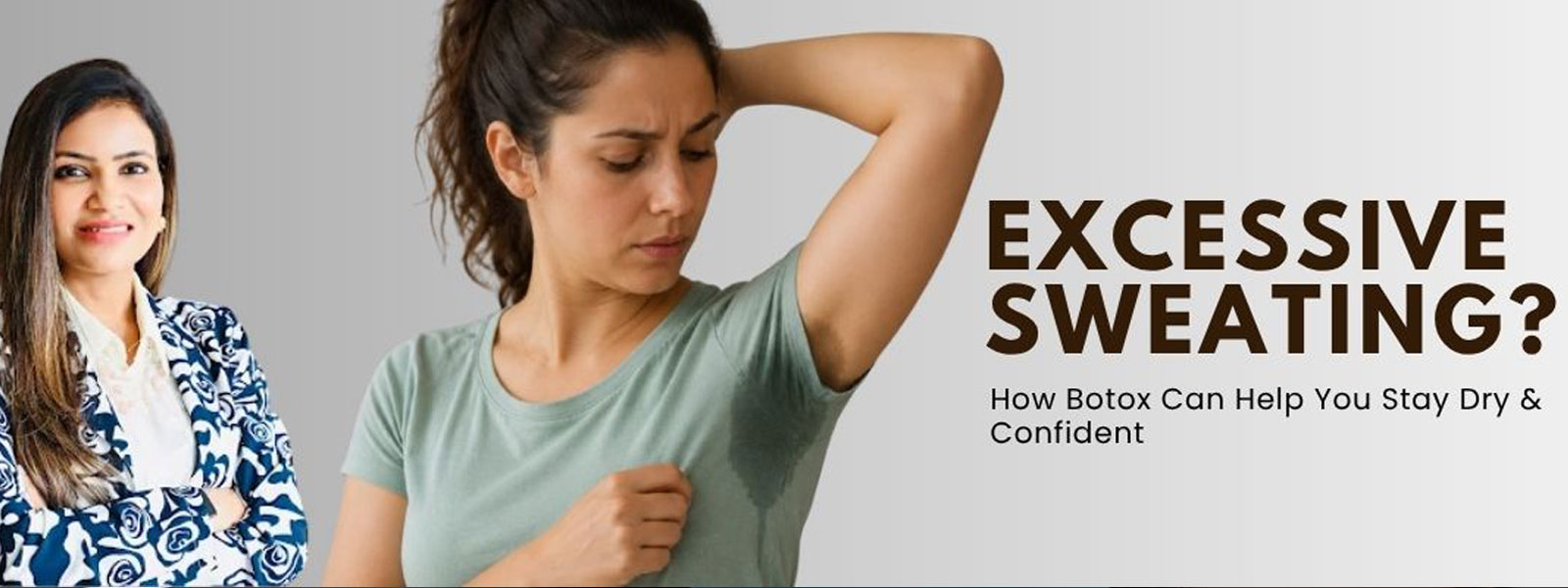
Do you constantly struggle with sweaty underarms, embarrassing sweat patches, foul odor in sweat, or excessive sweating even while sitting in an air-conditioned room?
Do you avoid certain clothes because of visible sweat stains? Do handshakes make you uncomfortable because of sweaty palms? Have deodorants, antiperspirants, or underarm lotions failed to give long-lasting relief?
If yes, you may be dealing with a common but often underdiagnosed condition called hyperhidrosis.
At Skination Clinics in Chattarpur, South Delhi and Greenfield Colony, Faridabad (Delhi NCR), excessive sweating is one of the concerns many patients silently struggle with for years before seeking medical help. Most people assume sweating is “normal” and simply try changing deodorants repeatedly, without realizing that effective dermatological treatments are available today.
One of the most advanced and scientifically proven treatments for excessive sweating is Botox therapy for hyperhidrosis.
While Botox is commonly associated with anti-aging and wrinkle reduction, many people are surprised to learn that it is also USFDA-approved for treating excessive underarm sweating.
In this article, let us understand:
* What hyperhidrosis really is,
* Why excessive sweating and foul odor happen,
* Why regular deodorants often fail,
* Treatment options available,
* And how Botox helps control excessive sweating effectively.
What Is Hyperhidrosis?
Hyperhidrosis is a medical condition characterized by excessive sweating beyond the body’s normal requirement for temperature regulation.
Sweating is a natural mechanism used by the body to cool itself. However, in people with hyperhidrosis, sweat glands become overactive and produce significantly more sweat than required.
This sweating may occur:
* Even in cool environments,
* Without physical activity,
* During stressful situations,
* Or sometimes continuously throughout the day.
The condition can affect:
* confidence,
* social interactions,
* professional life,
* clothing choices,
* emotional well-being,
* and overall quality of life.
Common Areas Affected by Excessive Sweating
Hyperhidrosis can affect multiple body areas.
Excessive Underarm Sweating (Axillary Hyperhidrosis)
This is one of the most common concerns seen in dermatology clinics.
Patients often complain of:
* visible sweat stains,
* repeated clothing changes,
* dark wet patches on clothes,
* embarrassment in social settings,
* underarm odor,
* difficulty wearing fitted or colored clothes.
Sweaty Palms
Excessive sweating of palms can interfere with:
* handshakes,
* writing,
* using phones,
* typing,
* handling paperwork.
Many patients describe feeling socially anxious because of sweaty hands.
Excessive Sweating on Feet
Sweaty feet may contribute to:
* foul odor,
* fungal infections,
* discomfort in footwear,
* slipperiness while walking.
Facial Sweating & Scalp Sweating
Some individuals experience excessive sweating over:
* forehead,
* upper lips,
* scalp,
* face.
This can become particularly distressing during:
* presentations,
* social events,
* makeup application,
* outdoor activities,
* weddings and functions.
Why Does Excessive Sweating Happen?
In most cases, excessive sweating occurs because the nerves stimulating sweat glands become overactive.
The sweat glands themselves are usually normal. However, they receive exaggerated signals from the nervous system.
Contributing factors may include:
* genetics,
* stress and anxiety,
* emotional triggers,
* heat and humidity,
* obesity,
* hormonal changes,
* certain medical conditions.
Sometimes, excessive sweating may also occur secondary to:
* thyroid disorders,
* diabetes,
* infections,
* medications,
* menopause.
This is why proper dermatological evaluation is important before treatment.
Why Does Sweat Smell Bad?
One of the most common misconceptions is that sweat itself smells bad.
Fresh sweat is usually odorless.
Foul odor develops when sweat interacts with bacteria naturally present on the skin surface, especially in areas like underarms and feet.
This bacterial breakdown leads to:
* unpleasant smell,
* body odor,
* sour odor,
* persistent underarm smell.
Patients often confuse:
* sweating,
* odor,
* and bacterial overgrowth,
although these may coexist.
Deodorants vs Antiperspirants: What Is the Difference?
Many people use these terms interchangeably, but they work differently.
Deodorants
Deodorants mainly help reduce odor by masking smell or controlling bacterial growth.
They do not significantly reduce sweat production.
Antiperspirants
Antiperspirants help reduce sweating by blocking sweat ducts temporarily.
These are often more useful in mild hyperhidrosis.
However, many patients with moderate or severe excessive sweating find that regular deodorants and antiperspirants are not sufficient.
Aldry Lotion & Aluminum Chloride for Excessive Sweating
One commonly prescribed topical treatment for hyperhidrosis is aluminum chloride hexahydrate.
Aldry Lotion contains aluminum chloride and is frequently recommended for excessive underarm sweating.
It works by temporarily blocking sweat ducts and reducing sweat secretion.
Usually, it is applied:
* at night,
* over dry skin,
* regularly for maintenance.
While Aldry Lotion may help some patients with mild sweating, it also has limitations.
Common problems include:
* temporary effect,
* skin irritation,
* itching,
* burning sensation,
* discomfort after shaving,
* incomplete improvement.
Many patients stop using it consistently because of irritation or unsatisfactory long-term results.
Can Benzoyl Peroxide Help with Smelly Underarms?
Benzoyl peroxide is commonly used in acne treatment, but dermatologists sometimes use it to help reduce underarm odor.
How?
Benzoyl peroxide helps decrease bacteria present on the skin surface. Since bacteria contribute to foul odor, reducing bacterial growth may temporarily improve body odor.
However, it is important to understand:
* benzoyl peroxide does not significantly reduce sweating itself,
* it mainly helps with odor control,
* results are usually temporary and partial.
Patients with true hyperhidrosis generally require more targeted treatments.
Other Hyperhidrosis Treatment Options
Depending on severity and body area involved, dermatologists may recommend different treatment approaches.
Oral Medications for Excessive Sweating
Certain oral medicines may help decrease sweating by reducing sweat gland stimulation.
However, they may cause side effects such as:
* dry mouth,
* constipation,
* blurred vision,
* dizziness,
* urinary difficulty.
These medications are not suitable for everyone and require medical supervision.
Iontophoresis
Iontophoresis is commonly used for:
* sweaty palms,
* sweaty feet.
It involves passing mild electrical currents through water to temporarily reduce sweating.
While helpful in some patients, it requires:
* repeated sessions,
* maintenance therapy,
* long-term compliance.
Botox for Excessive Sweating
Botox is one of the most effective and scientifically backed treatments for moderate to severe hyperhidrosis.
Botox contains botulinum toxin type A, which temporarily blocks the nerve signals responsible for activating sweat glands.
As a result:
* sweat production decreases significantly,
* underarms remain drier,
* sweat stains reduce,
* odor often improves,
* confidence improves substantially.
Is Botox Approved for Hyperhidrosis?
Yes.
Botox is USFDA-approved for severe primary axillary hyperhidrosis (excessive underarm sweating) in patients who do not respond adequately to topical treatments.
Over the years, Botox has become a globally accepted and widely performed dermatological treatment for excessive sweating.
Which Areas Can Be Treated with Botox?
Botox may be used for:
* underarms,
* palms,
* feet,
* forehead,
* scalp,
* face.
The treatment plan depends on:
* severity,
* area involved,
* patient comfort,
* lifestyle requirements,
* medical suitability.
How Does Botox Work for Excessive Sweating?
Sweat glands are stimulated by specific nerve signals.
Botox works by temporarily blocking these signals before they reach the sweat glands.
As a result:
* sweat production decreases dramatically,
* the treated area stays significantly drier,
* symptoms improve without affecting normal body functioning elsewhere.
Botox does not permanently destroy sweat glands. Its effect gradually wears off over time, which is why maintenance sessions may be needed.
How Is Botox for Hyperhidrosis Done?
Botox treatment is performed as an outpatient procedure in the clinic.
Step 1: Consultation & Assessment
The dermatologist evaluates:
* sweating severity,
* medical history,
* treatment goals,
* affected areas,
* previous treatments used.
Step 2: Marking the Area
The treatment area is cleaned and carefully marked.
Step 3: Tiny Injections
Small amounts of Botox are injected superficially into the skin using very fine needles.
The procedure is generally quick and well tolerated.
For sensitive areas like palms, additional numbing methods may sometimes be used.
Is Botox for Sweating Painful?
Most patients tolerate underarm Botox comfortably.
The injections feel like tiny pinpricks and the procedure usually takes approximately:
* 15–30 minutes.
Patients can usually resume normal routine activities shortly afterward.
When Do Results Start Appearing?
Most patients begin noticing improvement within:
* 3–7 days.
Optimal results generally develop over:
* 1–2 weeks.
Patients often report:
* drier underarms,
* reduced sweat patches,
* less odor,
* increased confidence,
* improved comfort in social and professional settings.
How Long Does Botox for Sweating Last?
Results are temporary but long-lasting.
Most patients experience improvement for approximately:
* 4–8 months,
although duration may vary individually.
Maintenance sessions are usually required to continue results.
Is Botox Safe for Excessive Sweating?
When performed by qualified dermatologists using proper techniques and dosing, Botox is considered a safe and effective treatment.
Possible temporary side effects may include:
* mild redness,
* swelling,
* tenderness,
* temporary discomfort at injection sites.
Serious complications are uncommon when performed correctly.
Who Is a Good Candidate for Botox for Hyperhidrosis?
You may benefit from Botox if:
* sweating affects confidence,
* deodorants are not helping enough,
* sweat stains interfere with clothing choices,
* sweating impacts work or social life,
* you are looking for a non-surgical solution,
* excessive sweating persists despite topical treatments.
A proper dermatology consultation can help determine whether Botox is suitable for you.
Final Thoughts
Excessive sweating is more common than most people realize — and importantly, it is treatable.
Many patients spend years struggling with:
* sweaty underarms,
* foul body odor,
* embarrassing sweat stains,
* social discomfort,
without knowing that effective medical treatments are available.
While antiperspirants, lotions, and topical products may help mild cases temporarily, Botox remains one of the most effective and scientifically proven treatments for moderate to severe hyperhidrosis.
The goal is not just reducing sweat, but improving comfort, confidence, clothing freedom, and quality of life.
If excessive sweating, body odor, or hyperhidrosis has been affecting your daily life, consulting a qualified dermatologist can help you explore safe and personalized treatment options.
About the Author
MBBS, MD Dermatology
Consultant Dermatologist & Aesthetic Physician
Dr. Swati Agarwal is a Consultant Dermatologist and Aesthetic Physician at SkinNation Clinics, with clinics located at Chhatarpur, South Delhi and Greenfield Colony, Faridabad (Delhi NCR).
She specializes in clinical dermatology, aesthetic dermatology, lasers, anti-aging procedures, pigmentation treatment, acne management, hair restoration therapies, and advanced cosmetic procedures.
Dr. Swati Agarwal is known for combining evidence-based dermatology with personalized patient care and natural-looking aesthetic outcomes.