


✖

Jul, 01 2026
Hair thinning in women is becoming increasingly common across all age groups. While some amount of daily hair shedding is normal, persistent thinning, reduced hair density, or increased scalp visibility can sometimes indicate underlying hair loss conditions that may gradually worsen if ignored.
One of the biggest challenges is that female hair thinning often develops slowly and subtly. Many women dismiss the early signs as:
* Seasonal hair fall
* Stress
* Poor diet
* Temporary shedding
Until the hair density noticeably reduces.
At Skination Clinic, many patients from Faridabad, South Delhi, Chhatarpur, Gurgaon, and across Delhi NCR seek consultation only after the scalp starts becoming visibly wider or the ponytail feels significantly thinner.
Recognizing early warning signs can help patients seek timely medical evaluation and potentially improve long-term hair preservation.
Is Hair Fall Normal?
Yes — losing some hair daily is completely normal.
The average person may shed around:
* 50 to 100 hairs per day
As part of the normal hair growth cycle.
However, concern usually arises when:
* Shedding becomes excessive
* Hair density reduces
* Scalp visibility increases
* Hair volume gradually declines
Hair thinning is not always about dramatic bald patches. In women, it often appears as diffuse reduction in density over time.
Early Signs of Hair Thinning Women Often Ignore
1. Widening of the Hair Partition
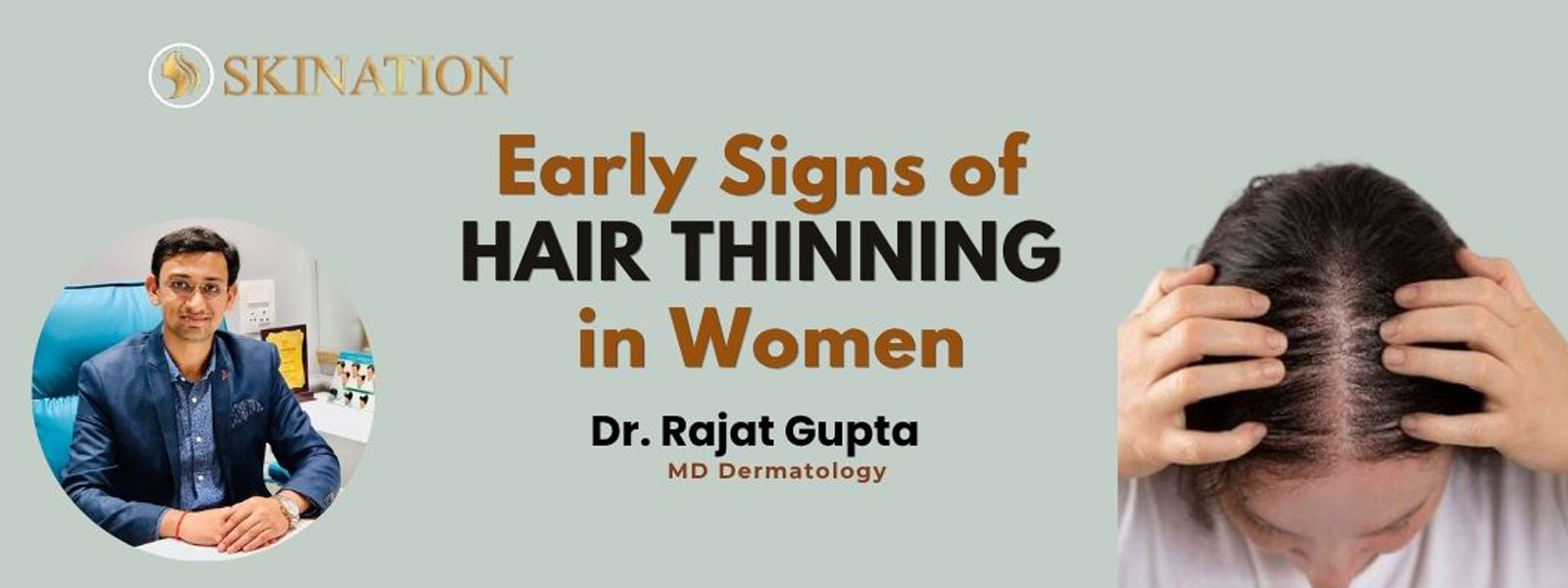
One of the earliest and most important signs is a gradually widening central partition.
Many women notice:
* More visible scalp
* A broader middle parting
* Difficulty covering the scalp while styling
This pattern is commonly associated with female pattern hair loss.
2. Reduced Hair Volume
Some women notice:
* Thinner ponytails
* Less overall hair bulk
* Reduced fullness while tying hair
Even before visible scalp changes appear.
3. Increased Hair Shedding While Washing or Combing
Occasional increased shedding may occur temporarily during:
* Stress
* Illness
* Seasonal changes
However, persistent excessive shedding lasting several months may require evaluation.
4. Hair Becoming Finer or Weaker
Miniaturization is a process where hair strands gradually become:
* Thinner
* Shorter
* Weaker
Before eventually reducing in density.
Women may notice that their hair:
* Breaks more easily
* Lacks strength
* Does not grow as thick as before
5. Increased Scalp Visibility Under Bright Light
Many patients first notice hair thinning:
* Under sunlight
* In photographs
* During video calls
* Under harsh indoor lighting
This subtle visibility often indicates early density reduction.
Why Is Hair Thinning Increasing in Women?
Several medical and lifestyle factors contribute to increasing hair concerns among women today.
Nutritional Deficiencies
Low levels of important nutrients can significantly affect hair growth.
Common deficiencies include:
* Iron deficiency (low ferritin)
* Vitamin D deficiency
* Vitamin B12 deficiency
* Protein deficiency
Hair follicles are highly metabolically active and often react early to nutritional imbalance.
Stress and Hair Loss
Chronic stress is one of the most common triggers for increased hair shedding.
Stress-related hair loss, known as telogen effluvium, may occur after:
* Emotional stress
* Illness
* Surgery
* Rapid weight loss
* Sleep deprivation
In many women, hair shedding begins several weeks or months after the triggering event.
Hormonal Imbalances and PCOS
Hormonal conditions such as PCOS (Polycystic Ovary Syndrome) may contribute to:
* Hair thinning
* Increased shedding
* Scalp oiliness
* Acne
Women with hormonal hair loss may also notice:
* Irregular periods
* Unwanted facial hair
* Weight changes
Hormonal evaluation may sometimes be recommended depending on symptoms.
Female Pattern Hair Loss
Female pattern hair loss is one of the most common causes of progressive thinning in women.
Unlike male baldness, women usually experience:
* Diffuse thinning
* Widening partition
* Reduced density at the crown
while the frontal hairline often remains preserved.
Genetics can play a major role.
Postpartum Hair Thinning
Many women experience increased hair shedding several months after childbirth due to hormonal fluctuations.
This type of shedding is usually temporary, but in some cases underlying nutritional deficiencies or genetic predisposition may worsen recovery.
Thyroid Disorders and Hair Thinning
Both hypothyroidism and hyperthyroidism may affect:
* Hair texture
* Density
* Shedding patterns
Persistent unexplained thinning sometimes requires medical investigations to rule out systemic causes.
Can Aggressive Styling Damage Hair?
Yes.
Repeated:
* Heat styling
* Tight hairstyles
* Harsh chemical treatments
* Excessive straightening
May contribute to hair shaft damage and breakage.
Traction-related hair loss may also occur in some patients due to chronic pulling on the hair roots.
Hair Thinning vs Hair Breakage
These two problems are often confused.
Hair Thinning
Usually involves reduced follicular density and scalp visibility.
Hair Breakage
Typically involves damaged hair shafts causing shorter broken strands.
Some patients may experience both simultaneously.
When Should You See a Dermatologist?
You should consider professional evaluation if you notice:
* Widening partition
* Persistent excessive shedding
* Visible scalp
* Thinning ponytail
* Sudden reduction in density
* Hair loss lasting several months
Early intervention is often more effective than waiting for advanced thinning.
How Is Female Hair Thinning Diagnosed?
Dermatologists may evaluate:
* Scalp condition
* Hair density
* Shedding patterns
* Medical history
* Hormonal factors
* Nutritional status
In some cases, blood tests may be advised to identify contributing deficiencies or hormonal issues.
Treatment Options for Female Hair Thinning
Treatment depends on the underlying cause and severity.
Management may include:
* Medical therapy
* Nutritional correction
* Lifestyle optimization
* Scalp care
* Regenerative procedures
PRP for Hair Thinning
PRP (Platelet-Rich Plasma) therapy uses growth factors derived from the patient’s own blood to support hair follicle function.
PRP is commonly used in patients with:
* Early hair thinning
* Female pattern hair loss
* Diffuse density reduction
Especially when follicles are still active.
GFC and Exosome-Based Treatments
Advanced regenerative approaches such as:
* GFC (Growth Factor Concentrate)
* Exosome-based therapies
Are increasingly discussed in aesthetic dermatology for hair rejuvenation.
These treatments aim to improve the scalp environment and support follicular health.
Treatment suitability varies depending on the patient’s condition and degree of hair loss.
Lifestyle Measures That Support Hair Health
Hair treatment is not only about procedures.
Important supportive measures include:
* Adequate protein intake
* Sleep optimization
* Stress management
* Correction of deficiencies
* Scalp care
* Minimizing excessive heat and chemical damage
Does Early Treatment Matter?
Yes.
Hair follicles may progressively miniaturize over time in certain hair loss conditions.
Seeking evaluation during early thinning stages often provides more treatment options and better long-term preservation potential.
Final Thoughts
Hair thinning in women is extremely common, but it should not always be dismissed as “normal hair fall.”
Subtle signs such as:
* Widening partition
* Reduced volume
* Increased scalp visibility
* Persistent shedding
May indicate underlying issues that benefit from medical evaluation.
The earlier the cause is identified, the better the chances of slowing progression and preserving hair density.
Modern dermatology now offers multiple evidence-based approaches for managing female hair thinning — ranging from nutritional correction and medical therapy to advanced regenerative treatments.
A personalized dermatologist-led approach is usually far more effective than relying solely on internet remedies or temporary cosmetic products.
Frequently Asked Questions
Is female hair thinning reversible?
Some forms of hair thinning improve significantly with early diagnosis and appropriate treatment, while others may require long-term management.
Can stress alone cause hair thinning?
Yes. Significant emotional or physical stress may trigger increased shedding known as telogen effluvium.
Is widening partition always a sign of hair loss?
Not always, but progressive widening of the partition can be an early sign of female pattern hair thinning.
Does PRP work for women?
PRP may help certain patients with early thinning or female pattern hair loss, particularly when follicles remain active.
Should women with hair thinning get blood tests?
Depending on symptoms and examination findings, dermatologists may recommend investigations for iron deficiency, thyroid disorders, vitamin deficiencies, or hormonal imbalance.
Author
Consultant Dermatologist with experience in scalp disorders, regenerative hair procedures, PRP therapies, and advanced dermatological treatments.